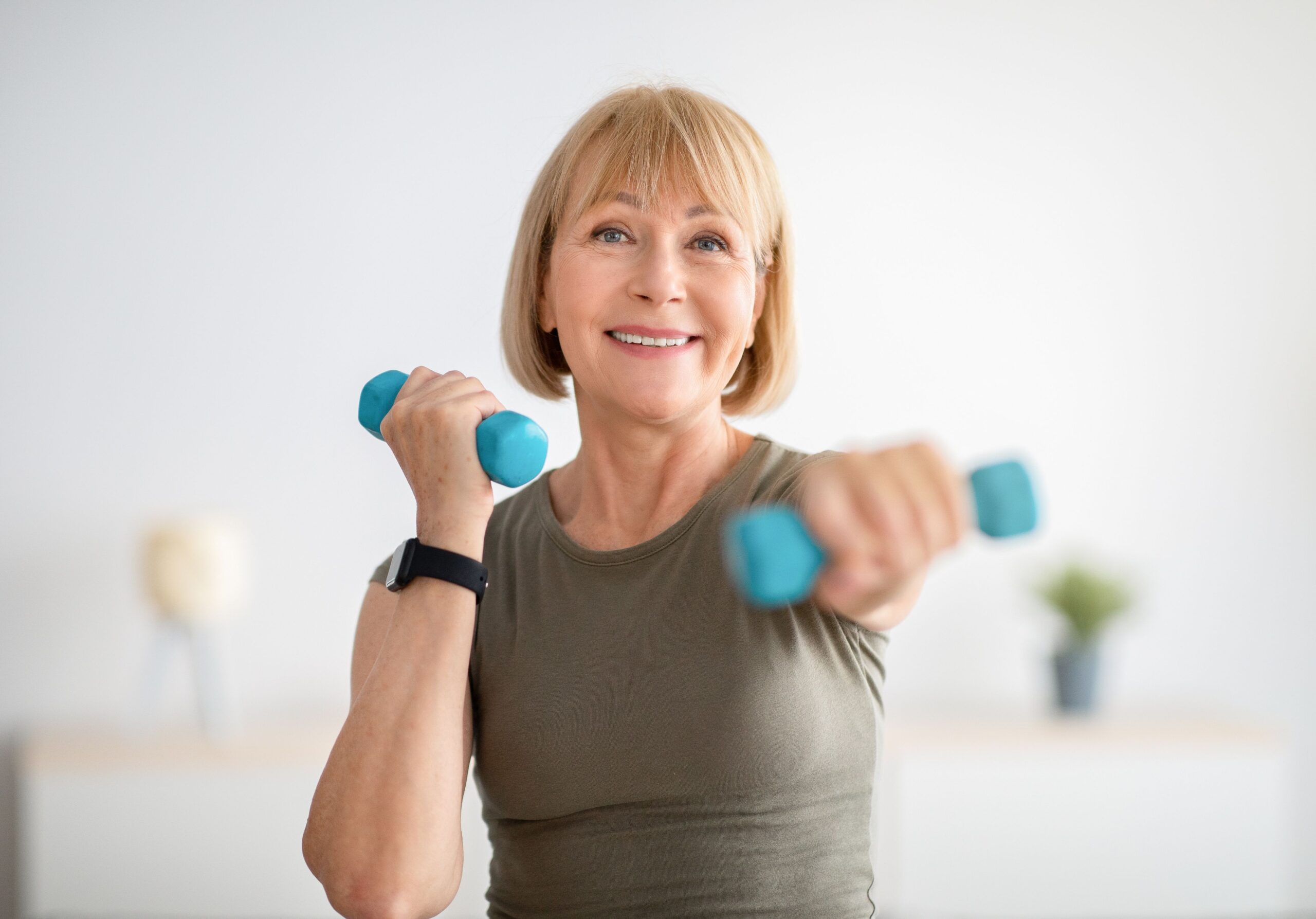
Muscle strength plays a very important role when it comes to the activities of daily living, such as climbing stairs, shopping or walking.
With age and the lack of demand for physical activity, around 20% of the muscle mass is lost, slowly and imperceptibly, which can reach 40% if we do not remedy it.
This loss is more noticeable in the lower limbs, causing slower walking, with a greater risk of falls and the possibility of depending on other people.
Strength exercises develop bone and muscle tissue, reduce its loss due to ageing, improve metabolism, and help you maintain an adequate weight and blood sugar level.
Benefits for the elderly
- you will be able to have a better posture
- reduce your body fat
- reduce the risk of falls
- walk with greater agility
- improve your reflexes
- walk up stairs or get up from a seat more easily
ADVICE
Practise without weights first, and avoid using excessively heavy weights in the beginning: as a guide, if you cannot lift the weight 6–8 times without considerable difficulty, you need to reduce the weight.
It is important to control breathing, releasing the air at the moment of greatest effort, and inhaling it when the muscle is no longer contracted.
Unless your doctor has limited your fluid intake, be sure to drink enough fluids when you are exercising.
WEIGHT GRIPPING POSSIBILITIES FOR PERFORMING EXERCISES
